
I. Foundations of Christian Instruction
Christian instruction’s roots lie within historical developments‚ deeply intertwined with Scripture and Tradition‚ forming a cohesive synthesis of faith and morals.
The Catechism of the Catholic Church serves as a foundational reference‚ summarizing core doctrines‚ while the USCCB aids in encountering Christ’s mercy.
Understanding the Church’s role‚ alongside catechesis and family programs‚ is vital for navigating contemporary challenges to effective Christian education today.
A. Historical Development of Christian Education
Christian education’s historical trajectory is a fascinating narrative‚ evolving from early Church practices to formalized systems. Initially‚ instruction occurred within families and communities‚ emphasizing oral tradition and the teachings of the Apostles. As Christianity spread‚ catechumens underwent rigorous preparation for baptism‚ receiving foundational knowledge of the faith.
The emergence of monastic schools during the Middle Ages preserved and transmitted Christian learning‚ while cathedral schools and universities later provided higher education rooted in theological principles. The Council of Trent (16th century) spurred a renewed emphasis on catechesis‚ leading to the creation of standardized catechisms.
The Second Vatican Council (1962-1965) prompted further reforms‚ advocating for a more accessible and engaging approach to Christian instruction. Today‚ the Catechism of the Catholic Church represents a culmination of this historical development‚ offering a comprehensive synthesis of Catholic doctrine. The USCCB continues to shape modern approaches.
B. The Role of Scripture in Instruction
Scripture occupies a central position in Christian instruction‚ serving as the inspired Word of God and the ultimate source of revelation. It provides the foundational narratives‚ moral teachings‚ and theological principles that shape Christian belief and practice. Effective instruction necessitates a deep engagement with the biblical text‚ employing sound hermeneutical principles to understand its meaning within its historical and literary context.
The Catechism of the Catholic Church emphasizes the importance of reading Scripture within the living Tradition of the Church‚ guided by the Magisterium’s authentic interpretation. Biblical literacy empowers individuals to encounter Christ personally and to discern His will for their lives.
Resources like biblical study tools‚ facilitated by organizations such as the USCCB‚ are crucial for fostering a deeper understanding of Scripture. Ultimately‚ Christian instruction aims to lead individuals to a transformative encounter with God’s Word.
C. Tradition as a Source of Christian Teaching
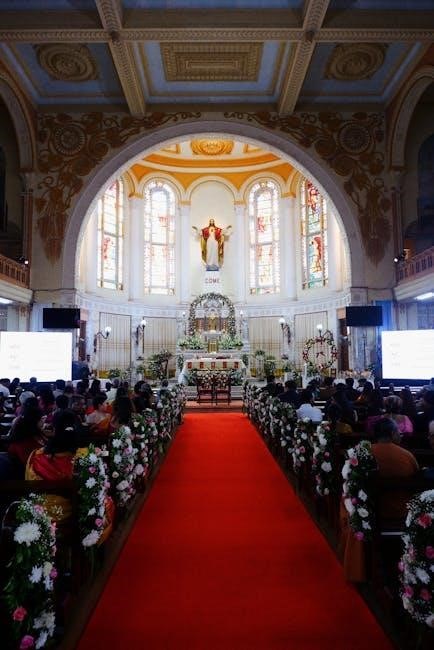
Tradition‚ alongside Scripture‚ forms a vital pillar of Christian instruction‚ representing the ongoing transmission of the Gospel message throughout history. It isn’t merely a collection of customs‚ but the living memory of the Church‚ guided by the Holy Spirit‚ preserving and interpreting the faith received from the Apostles.
The Catechism of the Catholic Church explicitly highlights Tradition as a source of authentic teaching‚ complementing and illuminating Scripture. This transmission occurs through the teachings of the Church Fathers‚ the decrees of ecumenical councils‚ and the consistent practice of the faithful.
Understanding Tradition requires recognizing the Church’s Magisterium – its teaching authority – which safeguards the integrity of the faith. The USCCB contributes to this by promoting faithful adherence to both Scripture and Tradition‚ ensuring a cohesive and authentic Christian education.

II. Core Doctrines of Christian Faith
Christian instruction centers on foundational beliefs: the Trinity‚ the nature and work of Christ‚ and the role of the Holy Spirit in daily life.
The Catechism clarifies these doctrines‚ while the USCCB supports their understanding‚ essential for a robust faith formation.
A. The Doctrine of the Trinity
Christian instruction fundamentally addresses the Doctrine of the Trinity – the belief in one God existing in three co-equal Persons: Father‚ Son (Jesus Christ)‚ and Holy Spirit. This central tenet‚ a cornerstone of Christian faith‚ isn’t easily grasped‚ requiring careful explanation and understanding.
The Catechism of the Catholic Church provides a detailed exploration of this mystery‚ emphasizing that these are not three separate gods‚ but one divine being. Effective Christian instruction must convey this nuanced understanding‚ avoiding simplistic or heretical interpretations.
Teaching about the Trinity involves illustrating the interconnectedness and eternal relationship between the three Persons. Resources from the USCCB can aid in presenting this complex doctrine in an accessible manner‚ fostering a deeper appreciation for the divine nature of God. It’s crucial to emphasize that the Trinity isn’t merely a formula‚ but a living reality.
B. Christology: The Nature and Work of Christ
Christian instruction dedicates significant attention to Christology – the study of Christ’s nature and work. This encompasses understanding Jesus as both fully God and fully human‚ a concept central to the faith. Teaching must address the Incarnation‚ where God took on human flesh‚ and its implications for salvation.
The Catechism of the Catholic Church meticulously outlines Christ’s life‚ ministry‚ passion‚ death‚ and resurrection‚ emphasizing their redemptive power. Effective Christian instruction explores how Christ’s actions fulfilled Old Testament prophecies and established a new covenant.
Furthermore‚ it’s vital to explain Christ’s roles as Prophet‚ Priest‚ and King. Utilizing Biblical resources alongside the USCCB’s materials can illuminate Christ’s teachings‚ sacrificial offering‚ and reign over all creation‚ fostering a profound understanding of His divine mission.
C. Pneumatology: The Holy Spirit and Christian Life
Christian instruction must deeply explore Pneumatology – the study of the Holy Spirit – and its vital role in the Christian life. This involves understanding the Spirit as the third person of the Trinity‚ co-equal with God the Father and God the Son‚ and actively present in the world.
Teaching should emphasize the Spirit’s work in creation‚ inspiration of Scripture‚ and empowerment of believers. The Catechism of the Catholic Church details the seven gifts of the Holy Spirit – wisdom‚ understanding‚ counsel‚ fortitude‚ knowledge‚ piety‚ and fear of the Lord – and their impact on moral living.
Utilizing Biblical resources alongside guidance from the USCCB‚ instruction should highlight the Spirit’s role in sanctification‚ enabling believers to live out their faith and bear witness to Christ. Understanding the Spirit’s presence is crucial for navigating life’s challenges and growing in holiness.

III. Sacramental Theology in Instruction
Christian instruction centers on Sacramental Theology‚ explaining Baptism‚ the Eucharist‚ and Reconciliation as outward signs of inward grace‚ vital for faith.
The Catechism clarifies these encounters;
A. Baptism and Initiation
Baptism‚ the foundational sacrament of Christian initiation‚ holds paramount importance in Christian instruction. It signifies cleansing from original sin and entry into the life of Christ‚ marking a new birth in the Church – the People of God.
Effective instruction must convey Baptism’s profound theological meaning‚ explaining its biblical roots and its role in becoming a child of God. The Catechism of the Catholic Church provides a comprehensive understanding of this sacrament‚ detailing its effects: forgiveness of sins‚ incorporation into Christ‚ and bestowal of the Holy Spirit.
Instruction should also emphasize Baptism’s connection to initiation‚ often involving Confirmation and Eucharist‚ completing the process of becoming a fully-fledged member of the Christian community. Understanding these interconnected sacraments is crucial for fostering a deep appreciation for the transformative power of God’s grace.
The USCCB resources can further aid in explaining these concepts.
B. Eucharist: The Central Sacrament
Eucharist‚ rightly considered the “source and summit of the Christian life‚” demands central focus within Christian instruction. It’s not merely a symbolic meal‚ but the real presence of Christ – Body‚ Blood‚ Soul‚ and Divinity – offered for our salvation. Teaching this truth‚ rooted in Scripture and Tradition‚ is paramount.
Instruction must clearly explain the transubstantiation‚ the miraculous change of bread and wine into the actual body and blood of Jesus. The Catechism of the Catholic Church provides a detailed explanation of this doctrine‚ emphasizing its profound mystery and sacredness.
Furthermore‚ instruction should highlight the Eucharist as a sacrifice of praise and thanksgiving‚ uniting us with Christ and one another. Stories‚ like Zack Short’s struggle with belief‚ underscore the need for clear and compelling teaching. Resources from the USCCB can aid in this endeavor.
Understanding the Eucharist’s centrality is vital for a vibrant faith life.
C. Reconciliation and Healing
Christian instruction regarding Reconciliation and Healing must emphasize God’s boundless mercy and the transformative power of the Sacrament of Penance. It’s a vital pathway to forgiveness‚ spiritual renewal‚ and restoration of a right relationship with God and the Church.
Teaching should clearly explain the elements of the sacrament: contrition‚ confession‚ and satisfaction. The Catechism of the Catholic Church offers a comprehensive guide‚ detailing the priest’s role as a minister of God’s mercy.
Instruction should also address the importance of examining one’s conscience and seeking healing for past wounds. This connects to broader themes of Social Justice and Christian Responsibility‚ fostering empathy and compassion.
Highlighting the Eucharist’s connection to forgiveness reinforces its central role. Resources from the USCCB can support effective teaching‚ guiding individuals toward a deeper understanding of God’s healing grace.

IV. Moral Theology and Christian Living
Christian instruction centers on the Ten Commandments and Beatitudes‚ guiding believers toward ethical conduct and a life mirroring Christ’s teachings.
Understanding moral theology fosters responsible living‚ emphasizing social justice and aligning actions with faith principles‚ as outlined in the Catechism.
A. The Ten Commandments as a Moral Guide
The Ten Commandments‚ foundational to Christian instruction‚ aren’t merely a list of prohibitions but a pathway to freedom and a deeper relationship with God.
These ancient precepts‚ rooted in divine revelation‚ offer a comprehensive moral guide for believers‚ shaping their thoughts‚ words‚ and actions.
They address fundamental aspects of human existence – worship‚ respect for life‚ fidelity‚ truthfulness‚ and contentment – providing a framework for ethical decision-making.
Christian instruction emphasizes that observing the Commandments isn’t about earning salvation‚ but responding to God’s love and demonstrating gratitude for His grace.
The Catechism of the Catholic Church elaborates on each Commandment‚ exploring its implications for Christian living and offering guidance for overcoming temptation.
Furthermore‚ understanding the spirit behind the law‚ as revealed in the teachings of Jesus‚ is crucial for authentic moral formation and discipleship.
Ultimately‚ the Ten Commandments serve as a constant reminder of God’s will and a call to holiness‚ guiding believers toward a life of virtue and love.

B. The Beatitudes and Christian Ethics
The Beatitudes‚ proclaimed by Jesus in the Sermon on the Mount‚ represent a radical reorientation of Christian ethics and are central to Christian instruction.
These blessings – “Blessed are the poor in spirit…Blessed are the meek…” – challenge conventional notions of happiness and success‚ offering a counter-cultural vision of the Kingdom of God.
They aren’t simply promises of future reward‚ but present realities‚ describing the qualities of those who are already experiencing God’s grace and favor.
Christian instruction highlights how the Beatitudes call believers to embrace humility‚ compassion‚ and a commitment to justice‚ even in the face of suffering.
The Catechism of the Catholic Church explains that the Beatitudes reveal the ultimate goal of Christian life: to become more like Christ.
Living out the Beatitudes requires a continual process of conversion and a willingness to prioritize spiritual values over material possessions.
They provide a powerful framework for ethical discernment‚ guiding believers to make choices that reflect God’s love and mercy in the world.
C. Social Justice and Christian Responsibility
Christian instruction profoundly emphasizes that faith isn’t solely a personal matter‚ but carries inherent social justice implications and a weighty responsibility.
Rooted in the teachings of Jesus and the prophetic tradition‚ believers are called to actively work for the common good‚ advocating for the marginalized and oppressed.
This commitment stems from a recognition of the inherent dignity of every human person‚ created in the image and likeness of God‚ as outlined in Church doctrine.
The Catechism of the Catholic Church details the Church’s social teachings‚ addressing issues like poverty‚ economic inequality‚ and environmental stewardship.
Christian responsibility extends beyond charitable acts to systemic change‚ challenging unjust structures and promoting policies that foster human flourishing.
The USCCB provides resources and guidance on applying Catholic social teaching to contemporary challenges‚ encouraging active participation in public life;
Ultimately‚ pursuing social justice is an integral expression of Christian faith‚ demonstrating love for God and neighbor in tangible ways.

V. The Church as the Educator
The Church‚ through its Magisterium‚ formally instructs believers via catechesis and supports family faith formation‚ nurturing Christian understanding;
Resources like the Catechism and USCCB publications aid this educational mission‚ guiding faithful discipleship and growth.
A. The Church’s Teaching Authority (Magisterium)
The Magisterium‚ vested within the Church‚ represents the authoritative teaching voice‚ safeguarding and interpreting divine revelation for Christian instruction.
This authority‚ exercised by the Pope and bishops in communion with him‚ ensures the faithful receive consistent and authentic doctrine‚ rooted in Scripture and Tradition.
The Catechism of the Catholic Church exemplifies the Magisterium’s work‚ offering a comprehensive synthesis of faith and morals‚ reflecting the Second Vatican Council’s guidance.
It’s a dynamic process‚ as evidenced by revisions – like paragraph 2267 under Pope Francis – demonstrating the Magisterium’s responsiveness to contemporary understanding.
The USCCB‚ as a national expression of the Magisterium‚ contributes to this teaching mission‚ providing resources and guidance for local communities.
Ultimately‚ the Magisterium’s role is to faithfully transmit the Gospel message‚ fostering a deeper relationship with Christ and His Church.
B. Catechesis: Formal Christian Instruction
Catechesis embodies the systematic and organized transmission of the Christian faith‚ a cornerstone of formal instruction within the Church’s educational mission.
It moves beyond simple information delivery‚ aiming for a conversion of heart and mind‚ fostering a living relationship with Jesus Christ‚ guided by the Magisterium.
Historically‚ catechesis has evolved‚ shifting from traditional models – like post-school programs – to innovative approaches like family faith formation programs.
The Catechism of the Catholic Church serves as a primary resource‚ providing a foundational framework for catechetical content and methodology.
Effective catechesis addresses the intellectual‚ emotional‚ and spiritual needs of learners‚ encouraging active participation and personal encounter with faith.
The USCCB offers valuable resources and support for catechetical leaders‚ ensuring quality and fidelity to the Church’s teachings.
C. Family Faith Formation Programs

Family Faith Formation Programs represent a significant shift in Christian instruction‚ recognizing the primary role of parents as the first educators in faith.
These programs move away from solely classroom-based learning‚ actively involving the entire family in a shared journey of faith discovery and spiritual growth.
Previously‚ models like after-school religious education are evolving‚ with families now engaging in activities‚ discussions‚ and prayer together at home.
This approach acknowledges that faith is lived and practiced within the context of family life‚ strengthening bonds and fostering a deeper understanding.
Programs often incorporate resources from the Catechism of the Catholic Church and the USCCB‚ providing guidance and support for parents.
The goal is to create a domestic church where faith is nurtured‚ celebrated‚ and integrated into daily living‚ addressing contemporary challenges effectively.
VI. Contemporary Challenges to Christian Instruction
Christian instruction faces hurdles from secularism‚ religious pluralism‚ and engaging youth—requiring innovative approaches to convey faith’s relevance in today’s world;
A. Secularism and its Impact on Faith
Secularism presents a significant challenge to Christian instruction‚ fostering a worldview increasingly detached from religious belief and moral frameworks rooted in faith. This manifests as a diminished understanding of core doctrines‚ like those summarized in the Catechism of the Catholic Church‚ and a questioning of the Church’s teaching authority (Magisterium).
The rise of secular thought often prioritizes reason and empirical evidence‚ leading to skepticism towards revelation and tradition. Consequently‚ transmitting faith to younger generations becomes more complex‚ as they are exposed to competing narratives and values.

This necessitates a renewed emphasis on apologetics – reasoned defense of the faith – and a compelling presentation of Christianity’s relevance to contemporary life. USCCB resources can aid in addressing these concerns‚ offering materials that articulate the faith in accessible and engaging ways.
Effectively navigating secularism requires not only intellectual rigor but also a commitment to fostering a personal relationship with Christ‚ demonstrating the transformative power of faith in everyday living.
B. Religious Pluralism and Dialogue
Religious pluralism‚ the coexistence of diverse faiths‚ presents both opportunities and challenges for Christian instruction. While respectful dialogue is essential‚ it must be grounded in a clear understanding of Christian truth claims‚ as articulated in resources like the Catechism of the Catholic Church.
Instruction must equip individuals to articulate their faith persuasively‚ yet charitably‚ in a multi-religious context. This involves recognizing the seeds of truth present in other traditions while firmly upholding the unique revelation of Jesus Christ.
The USCCB promotes interreligious understanding‚ but emphasizes the importance of evangelization – sharing the Gospel message – without compromising doctrinal integrity.
Effective catechesis must foster a spirit of both openness and conviction‚ enabling believers to engage with others respectfully while remaining steadfast in their faith. It’s crucial to avoid relativism‚ recognizing that truth is not simply a matter of personal preference‚ but a gift to be received and shared.
C. Engaging Youth in Christian Education
Engaging youth in Christian education requires innovative approaches beyond traditional models. The shift from after-school programs to family faith formation‚ as seen in parish initiatives‚ highlights a move towards parental involvement and experiential learning.
Addressing the struggles of young people‚ like Zack Short’s questioning of the Eucharist‚ demands honest and accessible instruction rooted in Scripture and the teachings of the Catechism.
Utilizing contemporary resources and technology is vital‚ but must be balanced with opportunities for personal encounter and spiritual growth.
The USCCB provides resources to support youth ministry‚ emphasizing the importance of fostering a sense of belonging and purpose. Effective catechesis must connect faith to daily life‚ addressing the challenges and concerns of young people in a relevant and compelling manner‚ nurturing a lasting relationship with Christ.

VII. Resources for Christian Instruction
Essential resources include the Catechism of the Catholic Church‚ valuable Biblical study tools‚ and comprehensive publications offered by the USCCB for effective learning.
A. The Catechism of the Catholic Church
The Catechism of the Catholic Church (Catechismus Catholicae Ecclesiae)‚ often called the Catechism or CCC‚ stands as a pivotal resource for Christian instruction. It’s a comprehensive reference work meticulously designed to summarize the entirety of Catholic doctrine‚ offering a synthesized presentation of essential beliefs concerning both faith and morals.
This foundational text doesn’t exist in isolation; it’s intentionally crafted to illuminate Catholic teaching “in the light of the Second Vatican Council.” The Catechism underwent revision‚ reflecting updates promulgated by Pope John Paul II and‚ more recently‚ Pope Francis‚ demonstrating its living and evolving nature.
Available in multiple languages – including Byelorussian‚ English‚ French‚ German‚ and many others – the Catechism facilitates accessibility for a global audience. It serves not only as a learning tool but also as an invaluable resource for research‚ providing a structured and authoritative exploration of the Catholic faith.
Its detailed organization and clear explanations make it a cornerstone for understanding the rich tapestry of Christian instruction‚ guiding individuals and communities in their journey of faith.
B. Biblical Resources and Study Tools
Effective Christian instruction fundamentally relies on a robust engagement with Scripture. Numerous biblical resources and study tools are available to facilitate deeper understanding and application of God’s Word.
These tools range from comprehensive study Bibles‚ offering extensive notes‚ cross-references‚ and historical context‚ to concordances that allow for detailed word studies. Commentaries‚ penned by theologians and biblical scholars‚ provide insightful interpretations of specific passages.
Digital resources‚ including online Bible platforms and mobile apps‚ offer convenient access to various translations and study aids. Utilizing these tools empowers individuals to explore the nuances of biblical texts and connect them to the broader narrative of faith.
Furthermore‚ participation in Bible studies and utilizing guided reading plans can enhance comprehension and foster a community of learning‚ enriching the overall experience of Christian instruction and spiritual growth.
C. USCCB Resources and Publications
The United States Conference of Catholic Bishops (USCCB) provides invaluable resources to support comprehensive Christian instruction within the Catholic Church. Their mission centers on accompanying God’s people with joy and encountering Christ’s mercy‚ directly impacting educational efforts.
The USCCB offers a wealth of publications‚ including curriculum frameworks‚ catechetical guides‚ and pastoral letters addressing contemporary issues. These materials are designed to assist catechists‚ educators‚ and families in conveying the richness of the Catholic faith.
Furthermore‚ the USCCB website serves as a central hub for accessing official Church documents‚ liturgical resources‚ and educational programs. They actively promote ongoing formation for those involved in faith formation‚ ensuring fidelity to the Magisterium.
By leveraging these resources‚ parishes and dioceses can strengthen their Christian instruction programs‚ fostering a deeper understanding and lived experience of the Gospel message.